
Article 3
Should people be free to believe whatever they want?
Author: Gareth Evans-Jones
Should people be free to believe whatever they want?
Imagine you arrive at school wearing something that is important to your identity, maybe a cross, a hijab, a kara, or a badge that reflects a belief or worldview you care about. Now, imagine being told to remove it. How would you feel? Would it matter whether your belief was religious or non-religious? Questions like these are at the heart of one of the most important human rights in Wales and around the world: freedom of religion or belief. This right protects people who follow a religion, people who hold a non-religious philosophical conviction, and people who are still deciding what they believe; and it helps us to live together peacefully in diverse communities by encouraging respect for different ways of seeing the world.
What is freedom of religion or belief?
Freedom of religion or belief is protected by Article 9 of the European Convention on Human Rights and recognised internationally in the Universal Declaration of Human Rights. This right means that people should be free to decide for themselves what they believe, including the freedom to follow or change a religion; follow more than one tradition; have no religion at all; or hold non-religious beliefs and convictions.
Many people associate this right only with religion, but it is much broader than that, as it protects people who identify as humanists, atheists, agnostics or pacifists, among numerous others. A useful distinction can be made between holding a belief and expressing a belief. Everyone has the right to hold their own beliefs, which is considered a fundamental freedom. People also have the right to express their beliefs through worship, clothing, symbols, celebrations and daily practices. However, this aspect of the right is not unlimited. In certain situations, restrictions may be placed on how beliefs are expressed if there are concerns about safety, protecting the rights of others, or maintaining public order.
An important point to note is that respecting someone’s right to hold a belief does not necessarily mean agreeing with it. In a democratic society, people often disagree, and human rights help ensure that disagreement does not become discrimination.
Freedom of belief in everyday Wales
Human rights can sometimes feel distant or abstract, but freedom of religion or belief affects everyday life across Wales. The Equality Act 2010 protects people from discrimination because of their religion or belief and this may be evident daily, for example, when you see a Muslim learner wearing a hijab, a Jewish learner observing a religious festival, a humanist learner expressing a non-religious worldview, or an atheist learner choosing not to take part in religious activities. For most people, these choices are an ordinary part of who they are, and the law helps ensure that people are treated fairly regardless of their beliefs.
However, rights sometimes need to be balanced. Schools may have to consider questions about uniform policies, health and safety, or the rights of other learners. This is why human rights are not always about simple answers, as they often require careful discussion, compromise and understanding.

A Bangor story: freedom of belief in practice
To understand why these rights matter today, it helps to look to the past, as religion has played a notable role in Welsh history. An interesting example of freedom of belief in practice can be found in the history of Bangor, north Wales. Today, some people might not immediately think of Bangor as a place with a history of religious diversity, but during the late nineteenth and early twentieth centuries, Bangor was home to various religions, including a small but active Jewish community.
As the community grew, local newspapers carried appeals for support to establish a synagogue, which was eventually opened in Arvonia House on the high street. Although it was modest, with two rooms serving the community’s needs, it provided an important place for worship, learning and community life. However, like many smaller Jewish communities across Britain, Bangor’s Jewish population later declined as families moved elsewhere for work and new opportunities. As numbers fell, maintaining a synagogue became increasingly difficult and the congregation eventually became too small to sustain the building, with the synagogue closing in 1963.
Despite the closure of the synagogue, the story did not end there as Jewish religious services were held at the Tabernacle Chapel on Garth Road, the chapel which belonged to the Calvinistic Methodist tradition (Welsh Presbyterian Church). Although Jewish and Christian communities hold different religious beliefs, members of the chapel made space available so that Jewish worship could continue. This act of cooperation is a powerful example of freedom of religion or belief in action, and of solidarity. Human rights depend on laws, but they also depend on people. Respect, understanding and practical support can make a real difference to minority communities.
The Bangor story demonstrates how people with different beliefs can work together while remaining true to their own identities.
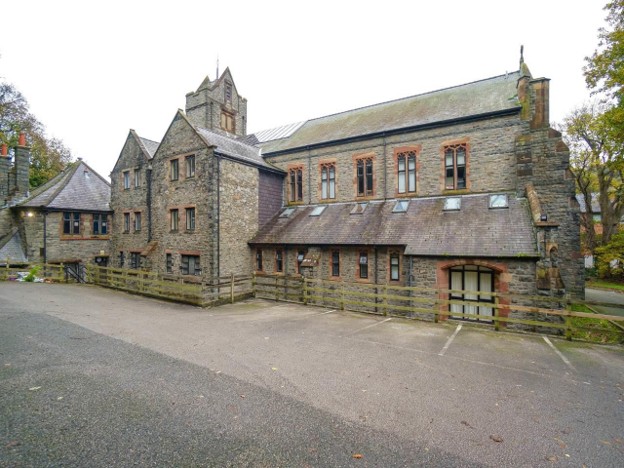
Capel y Tabernacl, Bangor
Image source: Varcity Living
Learning from difficult histories
While examples of cooperation are important, history also contains more challenging lessons, and it is important to acknowledge those. For centuries, Jewish communities across Britain faced exclusion and discrimination, with medieval rulers expelling Jewish people from England and Wales, preventing openly Jewish communities from existing for hundreds of years, and in later periods, anti-Jewish prejudice continued to appear in different forms.
Wales has many positive stories of community support and inclusion, but it has also experienced moments of religious prejudice and hostility. Recognising these difficult histories is important because it helps us understand why human rights protections are needed. Rights did not appear automatically; they developed because people recognised that discrimination and exclusion could cause real harm. Looking honestly at the past can help societies make fairer choices in the present.
Balancing rights in a modern democracy
One of the biggest challenges in any democracy is deciding how different rights should work together. For example, should people always be free to express their beliefs publicly? What happens when different beliefs collide? How should schools respond when disagreement arises? And can religious and non-religious perspectives be treated fairly at the same time? These questions do not have easy answers.
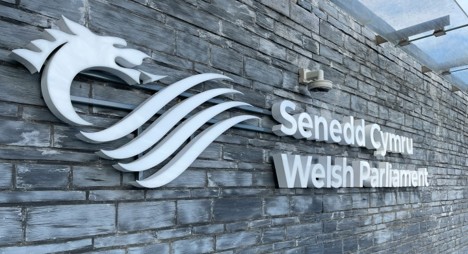
Modern Wales generally approaches such issues through a secular and rights-based system. This means that institutions such as the Senedd are not controlled by a particular religion and aim to represent people of all faiths and none. Indeed, ideas associated with the Enlightenment Period, democracy, and humanist traditions have influenced this approach in order to create a society whereby people with different views can live together respectfully. This balance is not always perfect, but it remains an important democratic ideal.
Why does all this matter?
Freedom of religion or belief is very much about identity and respect, and a sense of belonging. It helps people feel safe expressing who they are, by encouraging communities to value diversity, support fairness and challenge discrimination. And it helps young people develop important citizenship skills, including empathy, critical thinking and respectful discussion.
The story of Bangor’s Jewish community reminds us of both the challenges and possibilities of living in a diverse society. The closure of a synagogue tells one story, but the decision of a Welsh Presbyterian chapel to make space for Jewish worship tells another. It is a reminder that rights become meaningful when people actively support and respect one another.
As Wales continues to change, freedom of religion or belief remains an important foundation of democratic life. Understanding this right can help us build communities where people of different beliefs, and those with none, are treated with dignity, fairness and respect.